 The truth is, I only had a dim idea of where I was going or what to expect. A couple of days earlier, I received an email from “The Society” inviting me to observe some of its members engaging in their spiritual practices “within the hideaway of nature itself.” The email connected me to a short form, which among other questions asked if I would be available and bodily capable for a reasonably long hike early on Saturday morning. That Friday, I received a follow-up email with detailed instructions on where and when to show up, and what to do once I got there, noting that this particular time was unique to me, presumably to ensure a more reflective and individualized experience.
The show was called Babalon, and I was marginally familiar with The Society as a group that mounted some shows in LA’s dynamic immersive theater scene a couple of years ago, and was often mentioned along with other shows with a horror/haunted theme. However, as I’ve noted elsewhere, some of the techniques that have been refined in horror-themed shows have cross-pollinated into immersive shows across a variety of themes: small group or solo experiences, “secret” venues, personalized interactions with cast — all contributing an experiential intensity that may be unrelated to fear.
So there I was Saturday morning, packing a water bottle, an energy bar, applying sunscreen, and reviewing the pages of photo references and detailed instructions so that I could . . . go to a show.
The trailhead was busy; it was after all a beautiful summer morning in Los Angeles. I savored the dissonance of attending an event alongside a sizable group of people, who were actually not attending the same event as me, or at least I didn’t think they were. In fact, it was not possible to know with any certainty.
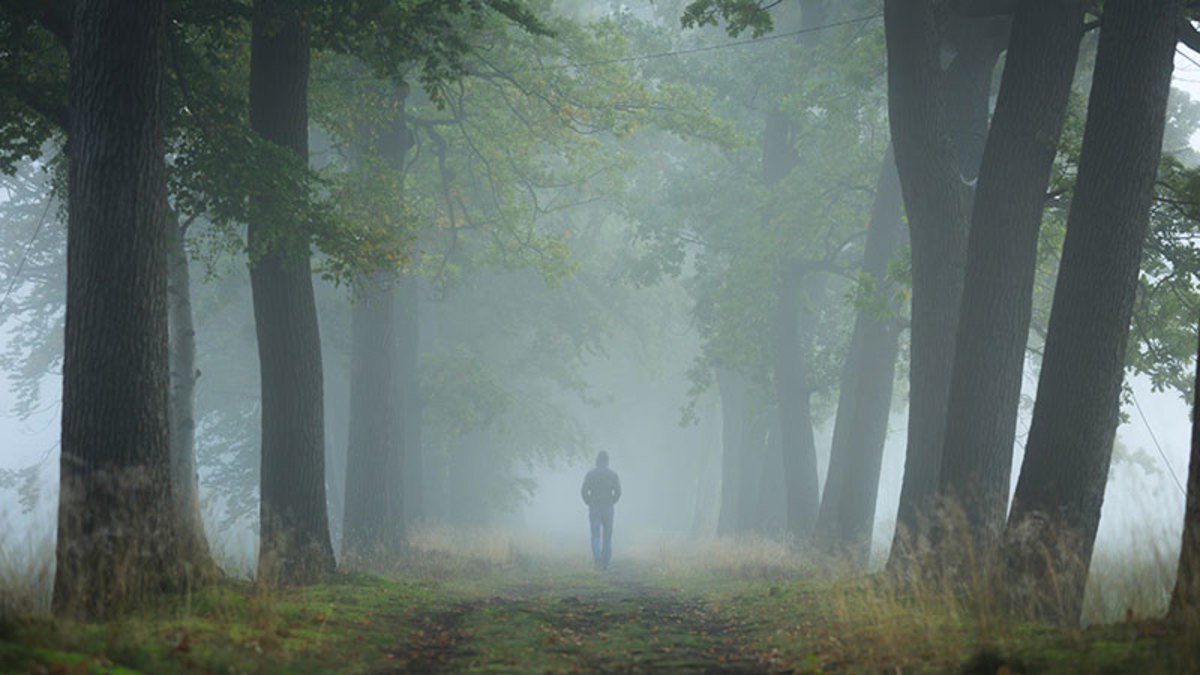 However, as is common with hiking trails, once my journey was underway, I soon found myself quite alone, save for the occasional courtesies to passed and passers-by. As I walked, I wondered: were they heading to/from my destination? Were they in the know? Initiated? Transformed? Enlightened? Before I knew it, without a single performer or setpiece that I could confidently identify, I was very much in a show that was possibly entirely in my own head.
The instructions advised that it would be about 2.5 miles and about 50 minutes to reach my destination. As I had committed the location of the trailhead to memory, I didn’t burden myself with any hard copies of the actual trail map. So, when I reached some unexpected forks in the path, I used my best judgment and hoped that I had chosen correctly — which seemed appropriately metaphorical for an experience about a group of seekers who have returned to nature to discover a more enlightened path.
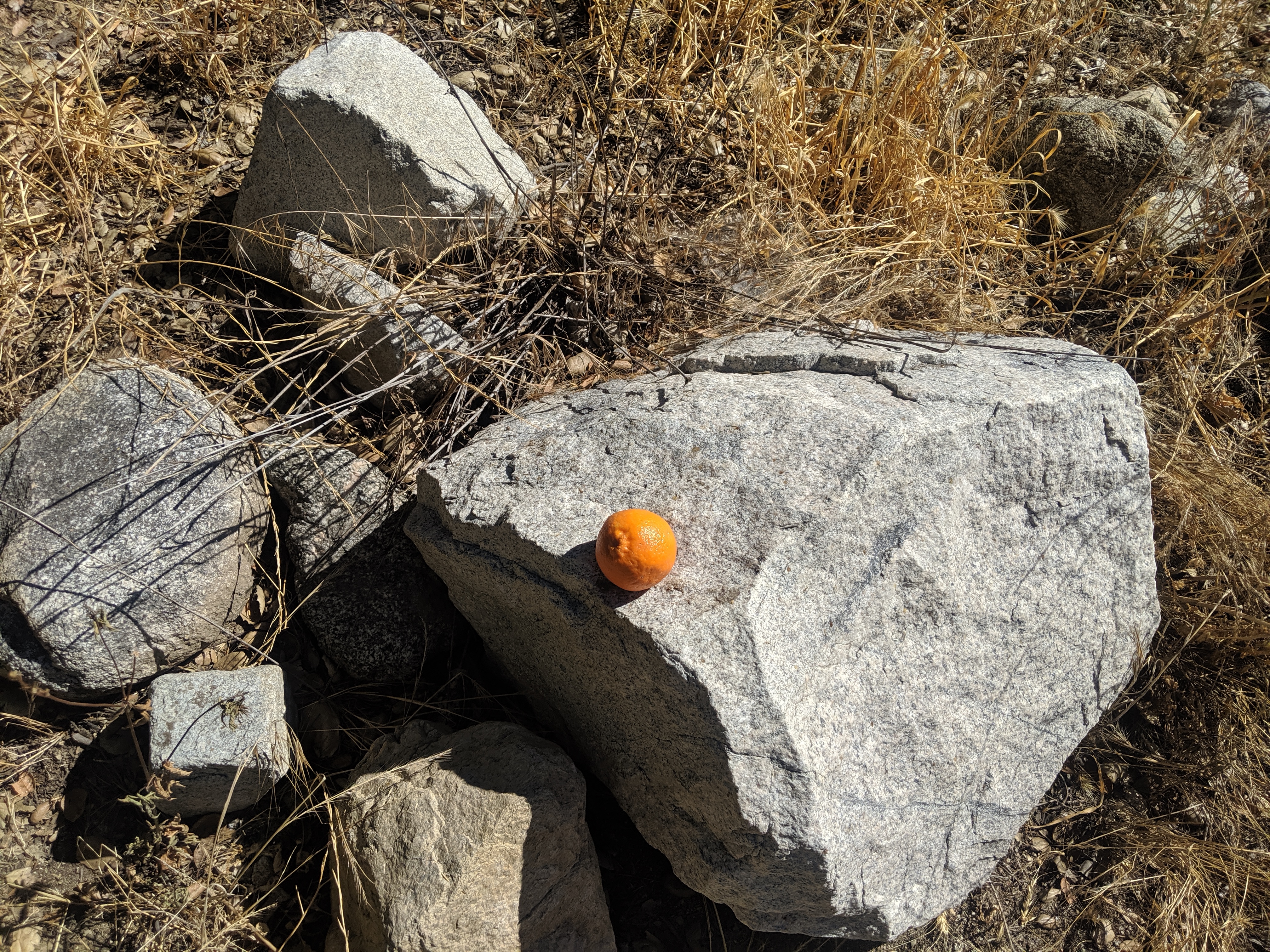 As I approached the destination about an hour later, it took me some time to locate the “guide” who I had been directed to find. She was quite literally off the beaten path, although in retrospect I realize that I had completely missed some subtle waypoint clues that had been hidden in plain sight. I had arrived, hot, sweaty, wondering if I had brought enough water, and with my curiosity and sense of accomplishment quite intact.
The first moments of any performance are critical. At this point, you and the show’s performers and creators must quickly reach an unspoken accord to suspend disbelief and go on a journey together. In immersive theater, the stakes can be even higher, because audience members need to literally enter the story and stay in it in order for it to work. It can be a big ask, and even the most willing of participants may “fall out” of the moment, or simply never fully arrive.
So it was a clever set-up that the guide presented herself as a down-to-earth, relatively grounded individual, who had left her unfulfilling corporate job to help The Society with their public image. It was a relatable, contemporary backstory that was a good fit for Los Angeles in 2019. It seemed entirely possible that I had actually been invited to a semi-clandestine gathering of an eccentric group in the middle of the woods, who had chosen to make a public display of their beliefs for all to see.
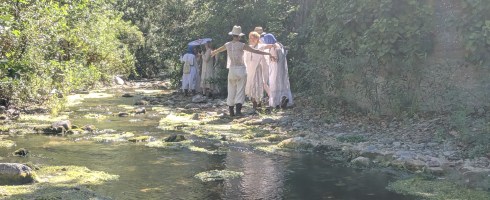
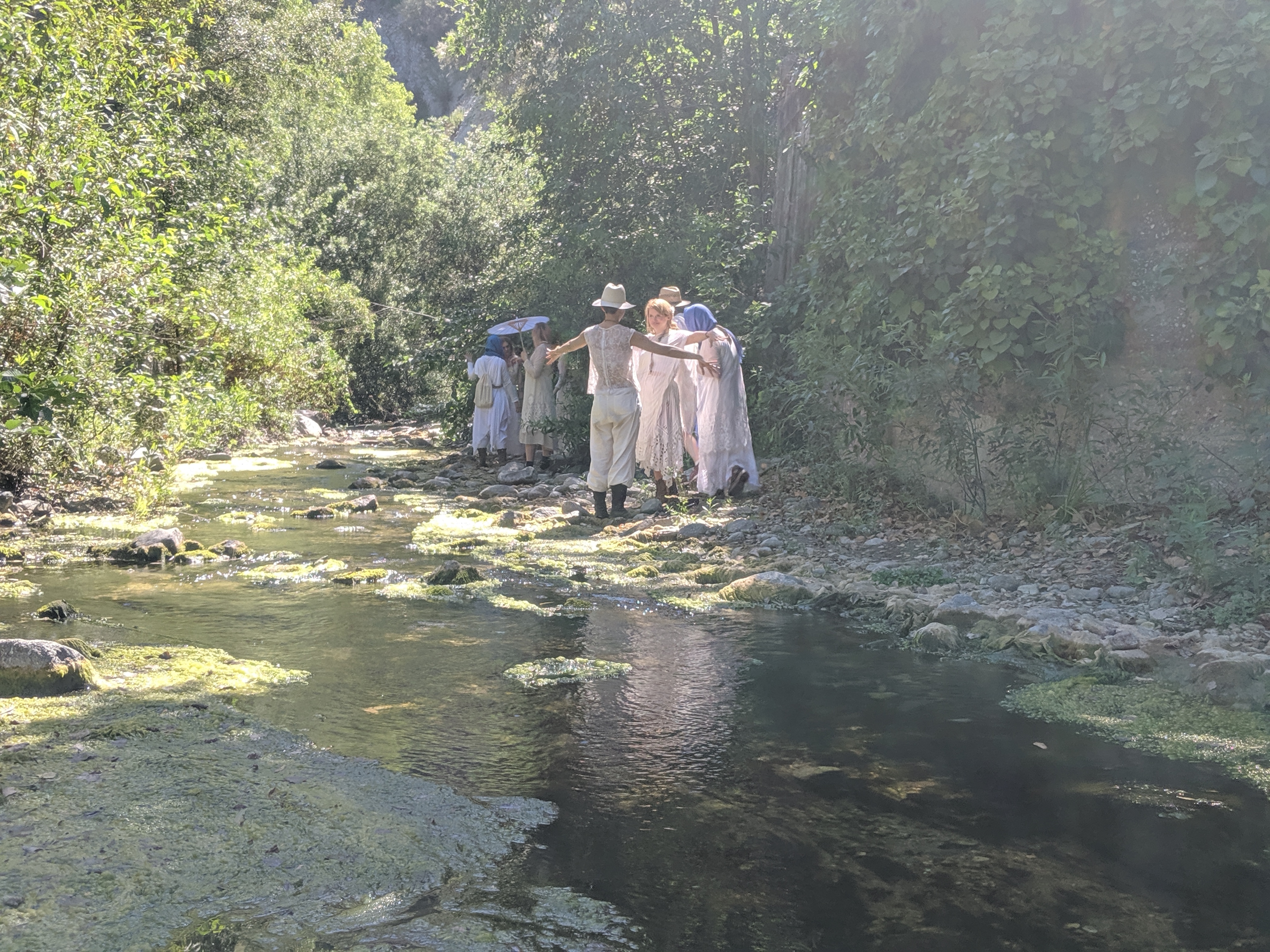 The guide shared some standard house rules: observe, don’t interfere, etc., and noted that I could stay and watch as long as I wanted from a variety of vantage points. What I found waiting for me was a group of women, frolicking in a creek-bed, consumed by a flow of hypnotic dancing and chanting, and dressed in airy attire that varied between ritualistic and fairylike. If you’ve ever seen the movie Picnic at Hanging Rock, a personal favorite (the original Peter Weir masterpiece, not the deplorable Amazon Prime debacle) then you’d have a decent approximation of what was unfolding.
I meandered and watched and listened and sought to tease out some sense or pattern to the endlessly unfolding ceremony. It was maybe more anthropology than theater, and with no clear start or finish, my eventual disengagement from any expectation of an outcome was its own reward. It was like a waking dream, an explosion of the sublime on the outskirts of the profane. When I had observed to my seeking soul’s content, I began the 2.5 mile journey back. Along the way, I had a lot of time to think about what I had done, seen, and was doing. The show was over (I think.) But I was still in the show.
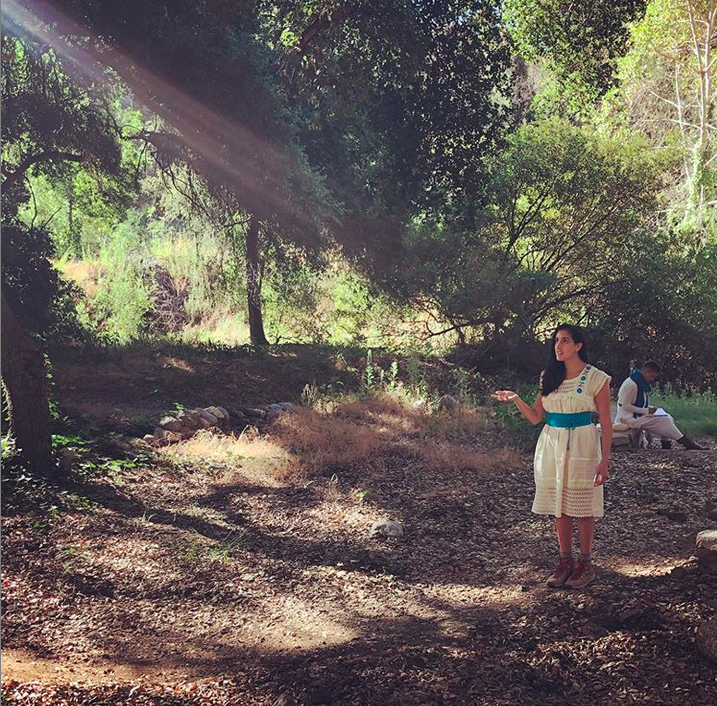 In addition to being intrigued by the potential of its storyline, I thought about how this show fit into the broader world of experience design. I reflected on the interplay between what had been directly produced as part of the show, what had been incidentally provided as part of the public location, and what I had personally brought to the experience. If I had merely seen the same “content” at a “normal” venue, would I have been affected as deeply? Of course the answer is no, and of course this isn’t news, because context differentiates themed entertainment and immersive theater from many other entertainment experiences.
Most immersive experiences, no matter how diverse, share a simple but common framework of:
- guest arrives
- show starts
- guest becomes part of the show
- show ends
- guest leaves
 This works really well for shows of all shapes and sizes, and in most cases, each of the bullet-points above, except for “the show,” are generally taken for granted. But Babalon exploded and blurred the lines between each of these phases. When did I really arrive? When did the show start? When did it end? This already sent my mind wandering in all kinds of wonderful directions, but what really struck me was how the five miles of walking factored into all of this, and how that might have been Babalon’s true stroke of brilliance.
Babalon embedded the actual show at the centerpoint of a hike: a meta-experience that served the functional requirement of providing access to the show, while also serving as a powerful metaphor for the theme of personal journey. It was the duration of the hike though that made me realize that merely attending the show required me to make a meaningful personal investment as a guest and unexpectedly enhanced the overall experience.
 We increasingly live in an on-demand world, especially with regard to entertainment options. We can see, hear, listen, read almost anything we want, whenever we want, wherever we want. That was not the world I was born into, and I’m not that old. My kids may never know the thrill of scouring the imports bin at a music store for an elusive B-side. Or the triumph of finding that out-of-print novel at the 4th used book store visited that day. Or driving an extra ten miles to that one video rental store that has the trippy arthouse films. Even live entertainment has been similarly streamlined. No more camping outside the record store to be first in line to get a coveted concert ticket. You can call me a foolish romantic, but there are tracks, books, flicks, and tix in my past that mean all that much more to me because of what I needed to do to get them.
I don’t mourn the march of progress, but that doesn’t mean that I don’t celebrate the opportunities to slip between the cracks. As creators, we should not shy away from asking more from our audiences. And as audiences, we should be looking for ways to put more of ourselves into the shows. If a creator can inspire me to literally or figuratively go the extra mile, and if my effort translates to a more personally meaningful experience, then I’m ready to show up.

 Let me rewind a bit. A few months ago, I caught wind of a project called
  There was just one problem. There was in Florida. It debuted at the
  NOTE: the rest of this post does not contain any explicit spoilers, but I do flirt dangerously with disclosing the nature of what happens. If you’re planning on seeing this show, and want a completely pure experience, then you’ve been warned.
 I am totally fascinated by the idea of immersive theatre. It blends storytelling, technical enhancement, and interactivity in a way that generally doesn’t exist outside the theatrical world except to a limited extent in some theme park and haunted attraction experiences. Ordinarily, attaching a genre to experiences that are attempting something groundbreaking is a restrictive and empty exercise, but it can still provide some useful context. As a baseline most productions tend to interpret it as a theatrical experience without chairs. The idea is that the elimination of the construct between the audience and the players allows for a deeper level of involvement with the drama. When it works, it can be tremendously effective. When it doesn’t, it might make you wish you had your chair back.

 Early on, I was given a task to surreptitiously hide a folded-up note in a separate room. The room itself was a dead end, so I couldn’t go off on a tangent of wild exploration, but it did allow me to be alone for a brief moment. It may seem obvious, but I realized that I had been presented with an unspoken choice on whether to read the note before hiding it.
 In a subsequent scene, when I was able to get some time alone with my assigned character, I asked him about the note and our conversation yielded a treasure trove of information including many tantalizing new clues and facts to piece together. It made me wonder what would have happened if I hadn’t read the note. What would our conversation have been like? I caught a glimpse of the myriad possibilities and twists and turns, and my experience was just one perspective out of 20+ guests in the context of something that might or might not have happened in the first 5-10 minutes of a 90 minute experience. You’re probably starting to get the idea of how big this thing could be.
 In order to pull something like this off, the creators would have had to essentially create an all-encompassing universe that could account for dozens of permutations that could be communicated, interpreted, and executed on the fly on a minute-by-minute basis by actors who are basically improvising almost 100% of the time. It’s like a single game of Dungeons & Dragons with 20 Dungeon Masters and 20 players, played in 20 different rooms all at the same time with frequent reshuffling of all components. That’s huge. Like head-spinningly crazy. Which is probably why it ultimately didn’t totally work. For me at least.
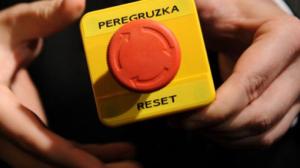 If I had to theoretically reverse-engineer this beast, the principal challenge becomes how to reconcile what could easily become a freeform exploration of chaos theory. Periodically, there seemed to be narrative inflection points, roughly occurring at the end of an “act” in theatrical parlance, although that ship sailed long ago. These moments temporarily aggregated all the players in a single room and forced various narrative threads into some form of interim resolution. Think of it as a metaphorical reset button that attempted to contain the rapidly spiraling madness.
 I give this team a ton of credit for creating this thing in the first place. I can imagine the B.S. sessions where people were saying, “What if we riffed on Plato’s Republic and inserted a bunch of characters from Greek mythology and rendered them against a German Expressionist backdrop and involved the audience, but totally let them feel like they were directing the action so that we’d basically be improvising 100% of the time so that each night we’d basically be putting on a new show.” Believe it or not, people have these kinds of crazy ideas fairly often. However, it’s a small handful who have the balls to actually follow through and try to raise the money, develop the concept, find the space, build the team, train the actors, build the set, and the hundred other things needed to bring this fully-grown Hydra to life.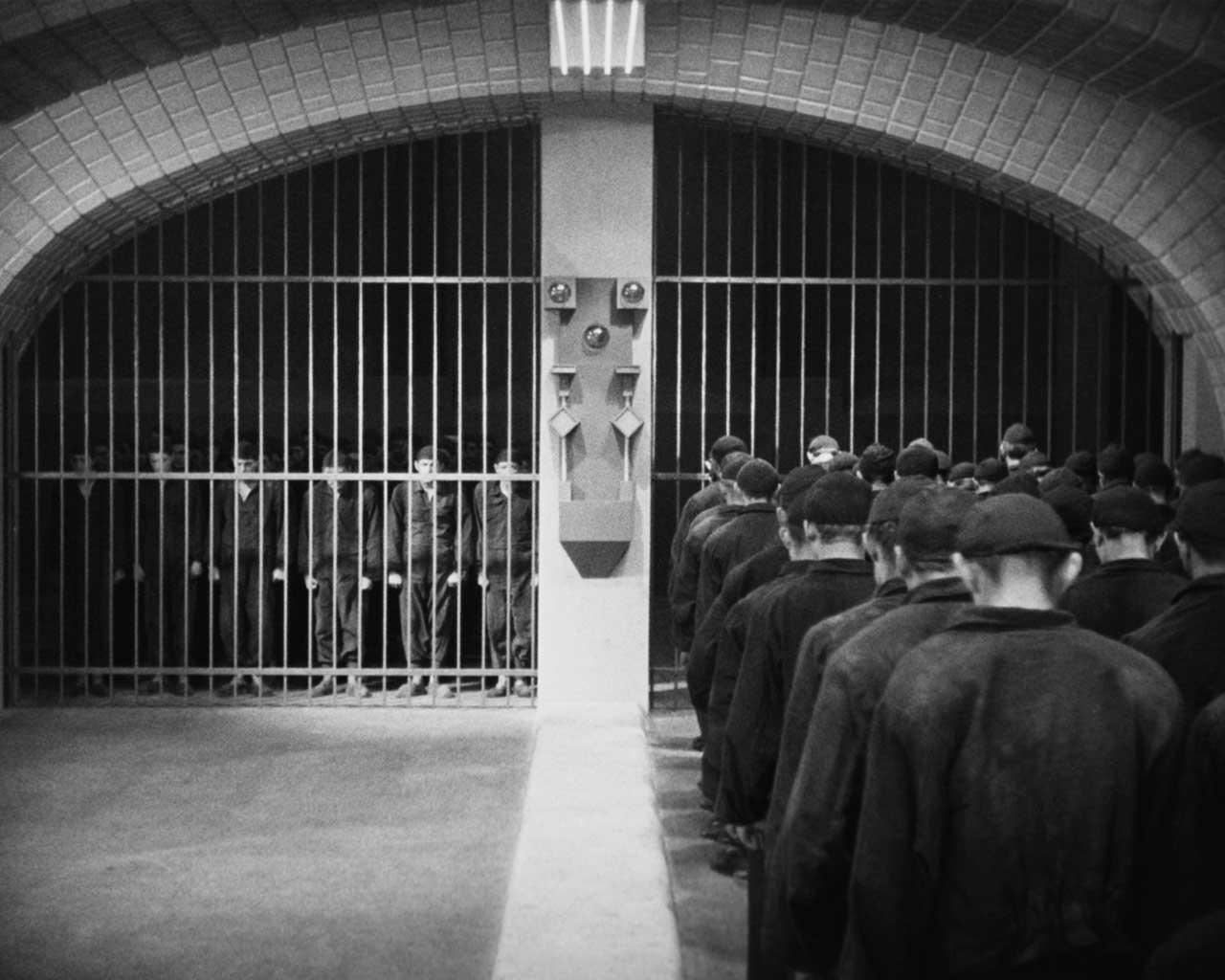
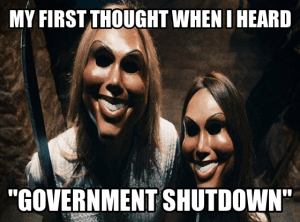 he Purge last week. OK, that came out weird, let me explain.
 The typical haunted attraction tends to be a fairly linear affair. You start at the beginning and keep moving until you get to the end, trying to absorb or avoid (depending on your preference) as many scares as you can along the way. In contrast, Breakout is billed as “An Immersive Escape Experience.” Groups of up to six guests are locked into the attraction at one time and given thirty minutes to try to figure out how to get out by deciphering clues and solving puzzles that are embedded in the surroundings. The concept of an Escape Room attraction is not new, and did not originate as a horror-themed show, but as
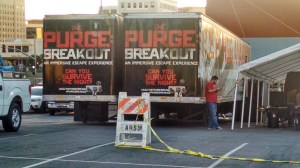
 We solved a bunch of puzzles. We tried our hardest. We celebrated our successes. But in the end, we died. Murdered to be exact. Time ran out, and for us, it just wasn’t enough. If we had five more minutes! If we had only done such-and-such! Did we remember to look behind that one thing? We wallowed in the coulda-woulda-shouldas for a minute or two, but the general consensus from all of us was, “That was SUPER FUN!”
 I was in awe at how naturally we worked together as a team, despite the fact that we barely knew each other. People’s strengths immediately surfaced — the codebreakers, the searchers, the observers, the scouts — without any explicit coordination. Almost all of the puzzles required some form of cooperation, but it somehow happened in a seamless way. When it was all over with, we felt like old friends, and made plans to get together for future events once October rolls around. It was magical.
 Some people go to Hawaii on vacation to enjoy a little R&R in a beautiful setting. Others prefer a staycation where they can catch up on hobbies or just get back in touch with the simple pleasures of home. Me, I head down to LA for three successive nights of immersive horror theater. At least, that’s what I did in October.
 All you know about Blackout is: you need to sign a waiver before entering, it takes place in the dark, you must do as you’re told when prompted, there’s a safe word in case it gets too intense, and you must walk through alone. Is your imagination working yet? Mine was. From the moment I purchased the ticket, my mind was filled with questions. What the hell happens in there? What are they going to make me do? Does anyone use the safe word? Am I up for this? Can’t we just have a nice dinner somewhere and tell everybody we went?
 Fast forward about 30 minutes. I emerge, running, out of the dark, out of the building and onto the same sidewalk in downtown LA that I had lately and nervously ambled along on my way in. My eyes scan for something familiar; I see the people I befriended in line. I see my wife. We all breathlessly exchange snippets of experience, but it’s not really a time for words, and we all arrive at that conclusion at about the same time. I feel the crisply soothing autumn air on my skin now that I’m outdoors again. I’m soaking in the vibe of people milling on the fringes of this nondescript corner of downtown LA. I can hear and feel my heart beating; it seems to be returning to a more normal pace, but it’s not in a hurry. And neither is the rest of me. I’m alert. I’m aware of this strange, animal feeling where I can experience the world in five or more senses, and calmly it alights on my understanding. This feeling — it’s the feeling of being alive. Not the “oh my god that was so scary, I’m so glad to be alive” feeling. Quite the opposite: I realized that I hadn’t had that much fun in a long time.
 As we made our way through the city, back to the car, out in public, it became very clear that there was US and then there was everybody else around us. We moved through the crowds in this glowing bubble that only we could see. We just had this incredible experience that lit our brains on fire, and nobody else had any idea as they went about their evening. There was no judgment or condescension on our part, but we felt different and special. And that feeling was important and persisted for the rest of the night, and for several days afterward. In fact, I can still conjure that feeling and remember what it’s like to feel my senses rip into the texture of life, and for that I’m both grateful for the experience and inspired to create something that can have that kind of effect.
 Once I got home, I called the number and received further instructions on where to show up and what to say when I got there. The following evening, we left the nighttime streets of 21st Century San Francisco, walked through the doors of a nondescript building, right into the year 1923 and the world of The Speakeasy.
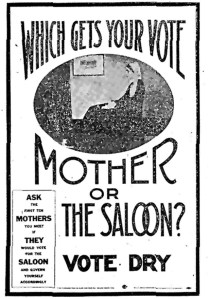 The Speakeasy will be a work of immersive theatre. Like many newly-minted terms in art, technology, culture, etc., it’s both challenging and somewhat pointless to attempt to concretely define immersive theatre because every new show seems to expand the scope of what it can encompass. Generally though, it refers to a theatrical experience which “breaks the fourth wall,” which is a fancy term for saying that the conceptual, invisible barrier that typically separates the audience from the players is understood to be nonexistent. In short, when you come to an immersive theatre show, you should expect to find yourself onstage. I am personally very interested in this concept, because it employs many of the storytelling sensibilities that are found in the world of themed entertainment and theme parks. If you think of a theme park as a giant work of immersive theatre, then you can start to get a sense of the exciting possibilities for both of these types of entertainment.
 The Memelab