I died in t he Purge last week. OK, that came out weird, let me explain.
The Purge is a film that came out last year that generally, and not incorrectly, gets lumped into the horror genre. However, it’s actually a political science thought experiment wrapped in a veneer of science fiction dystopia that dials up the suspense until it implodes into horror. The general conceit is that in the year 2022, a new political party has “fixed” America; there is 1% unemployment and almost no crime. The catch: all crime, including murder, is actually legal during a 12-hour period called the Purge that occurs once per year. Despite its macrocosmic context, the movie had a minimalistic feel that focused on the experiences of a single family in a discrete location and the ethical dilemmas posed by this practice. It wasn’t a perfect movie, but there was something oddly compelling and surprisingly thought-provoking about it. I knew there had to be more to the story.
When I heard that there would be a sequel being released this summer, I knew I would see it at some point. However, when I heard that they were promoting it through The Purge: Breakout, a pop-up haunted attraction that was touring the country, I dropped everything to get a ticket. A haunted attraction in July? Talk about Christmas coming early!
 The typical haunted attraction tends to be a fairly linear affair. You start at the beginning and keep moving until you get to the end, trying to absorb or avoid (depending on your preference) as many scares as you can along the way. In contrast, Breakout is billed as “An Immersive Escape Experience.” Groups of up to six guests are locked into the attraction at one time and given thirty minutes to try to figure out how to get out by deciphering clues and solving puzzles that are embedded in the surroundings. The concept of an Escape Room attraction is not new, and did not originate as a horror-themed show, but as some designers have discovered, they really are two great tastes that taste great together.
Welcome to the Hotel California
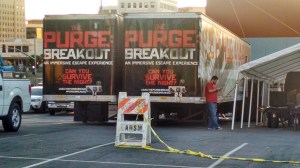
I found a friend who agreed that this sounded like an excellent way to spend an evening, and we headed out to the location, a parking lot on the outskirts of downtown Los Angeles where a few trailers decked out in full Purge regalia awaited us. As we watched the sun go down, I started to feel.
It wasn’t quite the stomach-churning dread of a haunted house. It was more of a light, but increasing anxiety that I would totally choke on the puzzles. I immediately reflected that I was grateful to be feeling anything! It occurred to me that going to the movies or even certain live events just wasn’t doing anything for me recently, and that one of the reasons why I keep coming back to haunted attractions is because they stir something that lies dormant for too long of a stretch.
Not for the claustrophobic
Before entering, we had about five minutes to get to know our three fellow participants with whom we would be trapped, and indulged in the futility of concocting a strategy for getting out. I was nominated as some kind of leader. Anxiety level rises. One of the hosts came out and gave us the setup: we’re locked in some weirdo’s basement on Purge Night, which begins in 30 minutes. We need to escape or he kills us. Not necessarily true to the sophisticated moral complexities of the movie, but I wasn’t complaining. We were characters in the story, and it was about to begin! We were provided with some straightforward rules: don’t break or take anything, don’t try to use a light, if you trigger one of the emergency buttons (you are locked in, after all) then it’s immediate game over, no refunds, no questions. Oh, and there was one more thing, only about 1% of everybody who’s played the game has escaped. And you thought Vegas was rough.
Once the door locked behind us, the panic began. . . immediately. Any remnant of any strategy that we thought would have been useful dissipated in the first 15 seconds. In true basement style, it’s not very well-lit, which is a problem when your success hinges on finding objects in your environment. In addition to miscellaneous klaxons, sound effects, and the sound of your blood pumping in your ears, every five minutes there were very loud, periodic reminders that the Purge would be starting in 25, 20, 15, etc., minutes. Needless to say, when all five of us were huddled in a very small room and stuck on a puzzle, these reminders were anything but calming.
 We solved a bunch of puzzles. We tried our hardest. We celebrated our successes. But in the end, we died. Murdered to be exact. Time ran out, and for us, it just wasn’t enough. If we had five more minutes! If we had only done such-and-such! Did we remember to look behind that one thing? We wallowed in the coulda-woulda-shouldas for a minute or two, but the general consensus from all of us was, “That was SUPER FUN!”

Totally Occupied The Purge
It was an exceptionally produced show. I love puzzles, and I felt that they were well-tested to be achievable but challenging (obviously, since we died!) The makeshift trailer setup was not at all reflective of the excellent production design and technical sophistication that kept our attention for thirty action-packed minutes in such a small amount of space. It was 100% adrenaline from beginning to end and when it was all over, I wanted more. However, part of what makes this type of show special is that it’s really something you do once and only once.
The coolest part of the show turned out to be something I least expected — us! A common feature of many immersive experiences is to get you out of your chair and into the action. However, this often takes the form of occupying the same space as the actors while they go about their business. The better-written productions allow for some latitude and improvisation, but there is still a script, and you’re still essentially watching, or in some cases being guided/goaded through some simple participation. Breakout was different — we were the cast. The story consisted entirely of what we did. There was one non-player cast member, but I think she was there to make sure that we didn’t go completely off the rails. And man, did we kill it! Before we got killed, that is.
 I was in awe at how naturally we worked together as a team, despite the fact that we barely knew each other. People’s strengths immediately surfaced — the codebreakers, the searchers, the observers, the scouts — without any explicit coordination. Almost all of the puzzles required some form of cooperation, but it somehow happened in a seamless way. When it was all over with, we felt like old friends, and made plans to get together for future events once October rolls around. It was magical.
We are a culture that is screamingly desperate for personal connection. We are undoubtedly the most well-connected, lonely people that the planet has ever hosted. Breakout showed that when you put people together and give them a story and some purpose, you just might end up with something unforgettable. We need to be creating more experiences like this.
Follow @thememelab Singing into the wind. Bailing out the Titanic with a teacup. That is the sense of futility I feel when it comes to sharing something insightful that hasn’t already been said about The Wizarding World of Harry Potter at Universal’s Islands of Adventure. The entire production is an unqualified success from the Butterbeer to Bertie Bott’s Every-Flavour Beans; from the Forbidden Journey to Filch’s Emporium. It’s a feast for the senses worthy of the Great Hall at Hogwarts, and cannot fail to delight even the most studious and persnickety of fans.
 As much as I gaped, marveled, delighted, and thrilled at everything I was experiencing, there was one detail, which I keep coming back to that crystallizes the strong sensibilities at work here. After having made my way through Hogsmeade a few times, I kept noticing a building with a modest line outside of it. I’m sure with a bit of investigation, or perusing the park map, or asking a cast member, I could have figured out what it was, but I did none of these things, and decided to just allow myself to be surprised. About every ten minutes or so, the doors to the adjoining building would open, about 30 guests would be allowed in, and the doors would close again. Curiosity piqued.
 So why is it that in a land that features one of the most technologically sophisticated attractions on the planet, an exquisitely themed restaurant complete with a bar that sells real alcohol, and an infinity of detailed exteriors and interiors, I was so taken by this bit at Ollivander’s? The answer is simple. The decision to showcase this particular component of the Harry Potter mythology demonstrates a true respect and understanding for the material and why it resonates with our culture.
 However, the execution is equally stunning. It’s a very low-profile attraction, and it’s easy to miss. You can easily enter the real store through an alternate entrance and be none the wiser of what’s happening in the adjoining room. This deliberate understatement in an environment of overload is a very tasteful design decision, and makes the experience feel even more special. Granted, it is somewhat of a holy grail to deliver guests a personalized, intimate experience in theme parks, but the sheer numbers of guests often make this an impractical goal, and tends to be at odds with another hallmark of theme park design: consistency. This makes the choice to use the modality of immersive theatre even more daring. Attractions have been breaking the 4th wall for generations as a technique to kickstart an immersive experience. From the Ghost Host and the talking skull to Indy and Evac, we have been personally invited to enter the story instead of just watch from afar. However, beloved as those characters are, they’re still a step removed from us, no matter how amazing the technology gets. Quite literally bringing Ollivander’s to life creates an impact that is not soon forgotten even if you are not the chosen one (and chances are, at my age, it’s gonna have to be a pretty slow day.)
 I’m just going to come right out and say it. I’m really just not into cars that much. Sure, I went through my pre-adolescent fixations with Hot Wheels and


 I lived in Prague during a period when email was still a novelty, mobile phones were seen in Tom Cruise movies as devices used for making phone calls, and internet cafes actually had computers in them. A popular means for distributing information was known as a “newspaper,” and a few were published in English for the benefit of the expat community. One of these featured a column called, “Easy Targets,” which was an unannotated list of people, institutions, concepts, etc. that would be recognizable to a contemporary reader. And that was it. Further commentary was neither provided nor required. A similar list published today might include, “Congress, Miley Cyrus, Facebook status, gluten-free beer, you get the idea.” One fateful afternoon, I picked up said newspaper and immediately sought out the Easy Targets, and at the top of the list was, “Smažený Syr.” For me, this was and is the absolute soul of wit. There is so much depth and commentary packed into those two words that it can still bring a smile to my face today. Let me explain.


 Out of respect for the organizers, I won’t give up any spoilers, but I will share some general impressions. Admission can be purchased on a per attraction basis. I was here from California and was in the middle of nowhere, GA. I was going to all three.

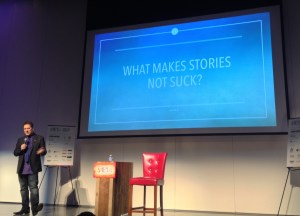


 In short, stories that do not have a deeply immersive component must suspend disbelief so that you can accept the story that is being told to you. On the other hand, immersive experiences must suspend disbelief so that you can accept the story that you end up telling yourself. This is a key insight for me as a storyteller. As a writer and filmmaker, I recognize that I often try to direct and control my audience’s reactions. For instance, I might evaluate the success of my piece based on how many people laugh or jump or cry at specific points that I have crafted. However, as an experience designer, that approach might not be ideal. A successfully designed experience may encourage a viewer to integrate what she is experiencing in a very personal way and with a highly individual outcome. To paraphrase Asa Kalama, another speaker at SATE’s story segment, sometimes the most effective approach in developing a successful experience may lie in providing a compelling framework for a guest’s creativity to blossom, and then getting out of the way!
 Once I got home, I called the number and received further instructions on where to show up and what to say when I got there. The following evening, we left the nighttime streets of 21st Century San Francisco, walked through the doors of a nondescript building, right into the year 1923 and the world of The Speakeasy.
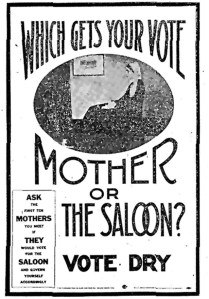 The Speakeasy will be a work of immersive theatre. Like many newly-minted terms in art, technology, culture, etc., it’s both challenging and somewhat pointless to attempt to concretely define immersive theatre because every new show seems to expand the scope of what it can encompass. Generally though, it refers to a theatrical experience which “breaks the fourth wall,” which is a fancy term for saying that the conceptual, invisible barrier that typically separates the audience from the players is understood to be nonexistent. In short, when you come to an immersive theatre show, you should expect to find yourself onstage. I am personally very interested in this concept, because it employs many of the storytelling sensibilities that are found in the world of themed entertainment and theme parks. If you think of a theme park as a giant work of immersive theatre, then you can start to get a sense of the exciting possibilities for both of these types of entertainment.

 The Memelab