I’m back from two terrifying trips to the outer limits of civilization. But while I was in Orange County, I checked out two of the most cutting-edge location-based VR experiences on the planet: Star Wars: Secrets of the Empire and ALIEN: DESCENT.
Some quick background. In the last few years, VR has generated a lot of buzz and comes in a lot of flavors. I’m specifically talking about the free-roaming, location-based flavor, which seemed too far-out to be feasible even just a few years ago.
– Free-roaming: you can walk around while in VR, thanks to some incredibly cool tracking technology. This is something of a minor miracle, considering that VR effectively makes you blind to your actual environment.
– Location-based: the experience incorporates features that are exclusively available in a specific, purpose-built venue.
I n other words, these experiences are likely to be more sophisticated and immersive than what is available with a typical home-based setup.
Both experiences were awesome, but I couldn’t help asking myself: which experience was more awesome? There isn’t an easy answer to this, so I did the obvious thing: generated a custom 6-point evaluation matrix to drive an obsessively thorough analysis.
Suited up? Blaster charged? Let’s have a VR shootout!
Spoilers ahead!
1. RR. Yup, Real Reality. You know, all that boring stuff that surrounds us when we’re not trying to escape it by pouring ourselves into yet another screen. From the moment I arrived, I was tuned into how effectively the non-virtual environment of these location-based experiences set me up for the main virtual attraction.
 STAR WARS: At the Downtown Disney location, the exterior theming and signage is primarily oriented on letting you know that you’re at THE VOID — the company that produced the experience. A few Star Wars display window graphics hint at what’s inside, but the lobby is similarly VOID-oriented. Overall, I was picking up on a multiplex design sensibility that enforces a clear distinction between the framing experience of the hosting facility and the show itself. I didn’t really think too much about this until I saw . . . .
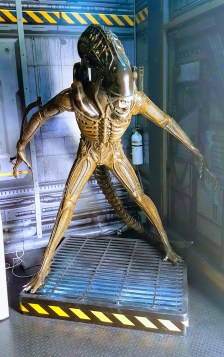
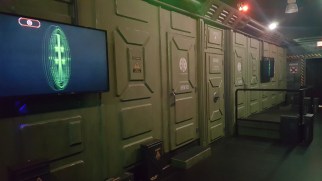 ALIEN: The experience and storytelling begins with exterior theming that features large-scale graphics that make you feel like you’re entering a futuristic outpost. The story continues inside where dark, moody lighting and sound effects, impressive set-pieces and wall graphics, costumed attendants, and even a full-sized Alien sculpture set the stage for deep-space adventure. It was fantastic to feel like a part of the story from the second I walked in.
WINNER: ALIEN
 2. Q-Factor: As much as these experiences should be about immersive storytelling and transparent technology, there is an undeniable Bond-esque gadget fetish that temporarily takes over when you’re gearing up for your mission.
STAR WARS: The VOID uses a custom head-mounted display (HMD) that is reportedly higher resolution than what is generally available to consumers, and essentially unavailable anywhere other than in a true VOID experience. Sweet! Players also suit up with an “armored vest” that includes a special feature; more on that later. Since the experience transforms you into a stormtrooper, the vest and helmet feel very appropriate.
ALIEN: The HMD in this experience is actually a Gear VR. It’s a longer technical conversation to explain why this is so cool, but it’s basically the David to the VOID’s Goliath. Imagine heading onto the freeway on your bicycle only to discover that you’re effortlessly going 85. In addition, cyborgian devices are strapped to each forearm and shin and seem to provide a crucial tracking function, while making you feel like you’re gearing up for a dicey situation . . . which you are.
WINNER: TIE for innovation, novelty and theming
3. 4D: This is at the heart of why these experiences are different than what you can do at home. 4D generally refers to physical special effects that engage your other senses beyond what you’re seeing and hearing (in 3D) via the HMD and enhance that sense of disappearing into the experience.
STAR WARS: Based on my experience with The VOID’s excellent Ghostbusters show, 4D is something they do well, and Star Wars was no exception. Floor haptics, fans, and heaters are all used effectively to provide real tactile feedback that related to the virtual environment. There were also unexpected effects like scent enhancements, creative floor textures, fog blasts, and a couple props you could touch. A nice detail was that the armored vests also contained haptics that generated a stun effect when hit by enemy fire.
 ALIEN: Fans and heaters were also in play, and floor haptics were used to drive epic “elevator” experiences that powerfully enhanced the visual design by creating the sense that you were moving through outrageously large volumes of space. There were also some rickety floor surfaces that added to the tactile sense of environment.
WINNER: STAR WARS: Slight edge with variety of 4D and creative uses.
4. Environment: VR is most exciting when it takes you somewhere that you otherwise couldn’t go. While this is primarily achieved by visual design, the underlying physical layout of the space can be designed to take advantage of some clever “sleight-of-foot” techniques. As you physically walk around, your sense of the actual physical space can be subtly manipulated to change your perception of the virtual space, which in turns adds to the sense of being transported into a new world.
 STAR WARS: This experience was full of surprises and moved you through lots of different environments from the inside of a transport ship to the surface of Mustafar to multiple levels of an Imperial base. There was an exciting sense of discovery and it was not easy to keep track of where you might actually be in real space, nor would you ever really want to, unless you’re a geek who can’t help trying to reverse engineer these experiences. The variety of locations is enriched by gorgeously rendered visual details that make you feel like you’re living the ultimate fan dream of walking through a Star Wars movie.
ALIEN: The impact of the sense of volume that I mentioned in the 4D section cannot be overemphasized. There are moments that are simply jaw-dropping as you feel dwarfed by the scale of the vast, dangerous caverns that you “move” down through before rising back up to the mysteries of the planetary surface. However, it’s hard not to notice that the layout of the experience essentially requires you to walk back and forth between a couple of discrete locations in the physical space, which are virtually reskinned as the story progresses. While this may seem like a killjoy technical observation, it’s not hard to figure it out, and it creates a subtle predictability that robs the experience of a certain element of surprise.
WINNER: STAR WARS
5. Story: Even the most breathtaking visuals will get old quickly if there isn’t an underlying story that gives a compelling reason to be walking through this world. This is a loaded topic given the huge popularity of all the IP involved, so I’ll try to keep it neutral.
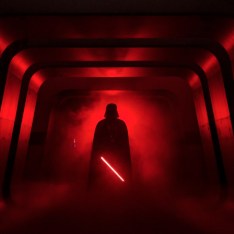 STAR WARS: A video preshow provides a mission briefing about retrieving a powerful weapon that has fallen into the hands of the Empire. Your mission is to infiltrate the Imperial base while disguised as a stormtrooper. The story continues to be developed through non-player characters that provide additional information and react to your presence. As the experience unfolds, you acquire a blaster, so that you can . . . react back. Once shooting ensues, story goes somewhat by the wayside. In the climactic scene, we come face-to-face with Darth Vader who is throwing down some of that nasty lightsaber fu that was notably featured in Rogue One. There’s a surprising twist in this scene that ultimately provides a satisfactory resolution to the narrative.
 ALIEN: A video preshow prepares you for transport to an alien-infested mining station with the mission of rescuing survivors. This is probably incredibly subjective, but this felt like a cleaner, more direct in media res setup that fine-tuned my sense of agency in the experience from the get-go. The story is skillfully communicated in a visceral, mostly non-verbal way resulting in a more organic narrative of exploration as opposed to moving through a linear series of staged scenes. It was refreshing to live the story rather than be told the story.
However, there are a couple of big misses. First, you don’t really save anybody — in fact, in one place, one of the survivors begs you to end it for him. It wasn’t clear whether this was meant to be a narrative twist, or whether this confirms that the experience is mostly about shooting stuff. Second, there is no Queen Alien or other climactic showdown. In fact, when the experience ended, I was actually surprised and thought that maybe there had been a glitch that had ended it prematurely. The scariest, biggest Alien in the show is the life-size sculpture in the lobby, which was super cool, but set an unfulfilled expectation for me.
WINNER: STAR WARS
6.  Interactivity: Arguably, the most compelling opportunity for this type of entertainment is providing guests with the ability to engage and affect both the environment and other players. In both experiences, a good portion of the interactivity involves shooting stuff. While attractions that feature shooting can be incredibly fun, even just holding a gun can be highly distracting and can make it hard to focus on other details. Both experiences seemed aware of this and handled it in different ways.
STAR WARS: One of the first things you do in the VR part of the experience is sit down on a bench. Now this may seem preposterously mundane, but sitting down in VR is actually quite amazing. When your brain and butt follow through in what amounts to an incredible leap of faith to make contact with something that you technically can’t see, it’s actually pretty cool. As mentioned above, you acquire your blaster a few scenes later in a similar fashion, by reaching out and grabbing a real item that you can’t actually see. Blaster in hand, you get plenty of chances to use it., including a pretty heavy firefight with some stormtroopers who have figured out that you shouldn’t be there. The performance and calibration of the gun is well-tuned and it was very satisfying to carefully aim a shot at a far-off target and hit it. A couple scenes feature puzzle-type interactions that require you to do something that isn’t shooting in order to advance. These interactions were few and far between though and didn’t require much group cooperation.
 ALIEN: Let’s be honest. This one is mostly about the shooting, but oh what delicious shooting. Your gun fires laser bolts as well as grenades, each with its own trigger or button, with different reload periods and damage. The gun also has a laser sight that you can turn on or off (for extra challenge). Just sayin’, it was incredibly satisfying to fire this gun. The vast virtual spaces (see Environment above) for your projectiles to traverse was a major enhancement. Also, because of the way the story is setup and developed, I found myself communicating and interacting more with the other player as we worked together to shoot our way through.
A puzzling but intriguing twist is that the experience is launched with two teams of two players who are sent to different physical staging areas. After entering the virtual experience, you see what appears to be the other team, although I’m still not sure whether that was really them, or just an artificial construct to suggest a larger-scale experience. There simply wasn’t a payoff to this setup, and I didn’t find a scenario that required a collaborative effort, but it would have been really cool if there was.
WINNER: NEITHER. Yeah, I know the other word for that is TIE, but this is the area that needs to shine if this type of entertainment is going to be seen as anything other than a next-gen video game.
OVERALL WINNER: STAR WARS
On the basis of sheer points, Star Wars: Secrets of the Empire blasts its way to victory by tallying a decisive win in two categories and a slight edge in a third. No slouch though, ALIEN: DESCENT posted a decisive win in one category and showed up strong in every other category.
CONCLUSION
I have been enthusiastically recommending both experiences, and feel that they represent solid strides forward for the VR industry as a whole, which seems to be floundering a bit in the Trough of Disillusionment.
Neither experience is perfect, and there’s still a huge opportunity to create something that pushes interactive capabilities to another level. For many people, one of these experiences may even be their first exposure to this type of sophisticated VR, if not VR period. The stakes are high to deliver on the hype, but the high quality and entertainment value of both shows is a good sign of things to come.
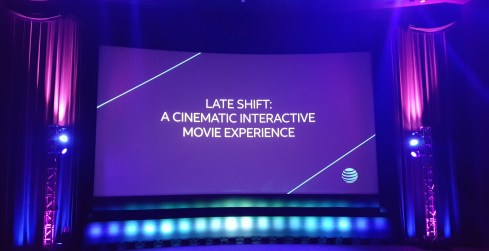
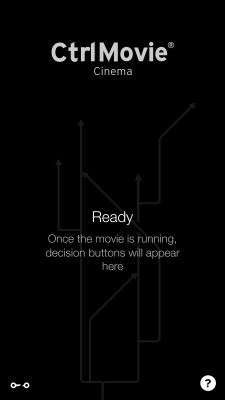 The setup was surprisingly simple. Guests were asked to download the lightweight CtrlMovie app on their smartphone, connect to a specific WiFi network in the theater, launch the app, and be patient. Introducing a “bring-your-own” technology requirement into an entertainment venue is always a gamble, but the folks at
 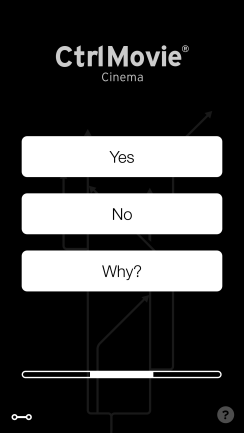 Late Shift tells the story of an innocent guy who gets caught up in a heist gone wrong. At various points during the movie, a small subtitle appears on the screen providing 2-3 choices for our hero. These same choices also appear in the mobile app, allowing viewers to vote for what they want the hero to do. After a few seconds, the subtitle is updated to indicate the option chosen by the majority of the audience while the movie continues along the chosen path. The process is completely intuitive and requires no training, and the entire decision sequence lasts 6-7 seconds.
 Sport: The audience would often react to various outcomes with the types of “YEAHHs” or “AWWWs” that you would expect from a football game. Disappointment makes sense since you can easily convince yourself that a better version of this movie exists and unfortunately, you’re not watching it. Kind of like rooting for the Falcons during Super Bowl LI. It’s also ironic since being able to watch the movie your way is one of the selling points of this experience, but see Social above and welcome to the human experience.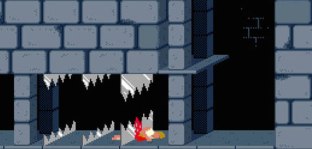
 I kept trying not to “go there” by overanalyzing it, but I always enjoy experiencing something that makes me think about storytelling in a new way. In what I initially perceived as shortcomings, I saw opportunities and questions for further exploration. Would this be more/less fun to watch alone? How about a group of your closest friends? How about as a form of speed dating? Would it work better as a 10-minute short? Are some genres and stories more compatible? Does everything just work when you remove the moral weight from the narrative? Does this need to take place in a movie theater at all? I look forward to experiencing or helping to create some of the answers to these types of questions. In the meantime though, the phone’s going back into my pocket.
 “What the hell did you just do to me?!” If I hadn’t actually spoken the words aloud, they were certainly running through my head (among other things), but let me set this up for you.
 I also produce interactive experiences. “Interactive” means something different to each person you ask, but I loosely define it as the integration of technology in an environment to extend, enhance, or personalize narrative possibilities. That “anything goes” vibe you’re picking up on is intentional.
 One of the most exciting and challenging phases of the production process is brainstorming with a group of creative people in a relatively untethered fashion. In some of these sessions, where anything is valid and the ideas are crackling with vision and potential, someone may ask me, “Is that doable?” Thankfully, I usually don’t need to have a ready answer in that type of session. At some point the execution of realistic solutions within the pesky limits of time, money, technology, etc., can be a creative art in itself.
 This type of thinking quickly ventures away from the domain of viable experiences and into the realm of science fiction. In other words, it seems unlikely that we’ll get a practical glimpse of this kind of stuff anytime soon.
 He stood in front of me holding a mobile phone, and to the best of my recollection he waved his hand over and across the screen and back, like a fumbling magician doing a trick that everybody knows isn’t going to work. And then he asked,”Did you feel that?”
 The device is called Entrim 4D, and it generates a small current that stimulates the vestibular system in a way that mimics the body’s response to actual motion. The purpose of this is to mitigate potential motion sickness caused by VR. Next, I did an actual VR demo of a racing experience, this time with a Gear VR rigged up with Entrim. With each turn of the virtual car, Entrim simulated the corresponding motion in my body, which was somewhat less off-putting since it was supported by the VR visuals.
 A good show takes you on a journey down a path. Technology may play a part in paving the path or shining a light to guide the way. Regardless of the machinery behind the scenes though, creators ultimately provide an imperfect space that can only be completed by the imagination of their guests. There is an unspoken agreement that asserts the integrity of each party and the mutual trust between them.
 By contrast, a technology like Entrim is an override that forces you to feel in a specific way. It removes the question of how it makes you feel, because it no longer needs to ask. While Entrim itself seems relatively harmless, it feels like an early waypoint on a slippery slope that may lead to some version of my sci-fi daydreams of creepy, cyborg technology.
 “Dude, how did you score those tickets?!”

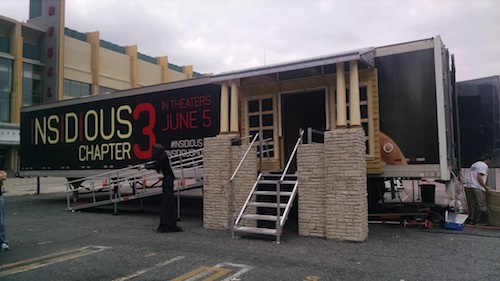
 The tiny chamber was cramped, dimly lit, and filled with all kinds of bric-a-brac that evoked the home-gone-wrong feel of the films. A monitor turned on and played a short video introducing the upcoming VR experience. A previously unseen door opened and another ghoulish and relatively sedate character beckoned me forward and into a chair facing a familiar red door. Seconds later, I was in the Rift, heading into the Further. Or so I thought.
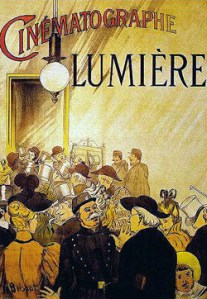 I recalled a story I heard in film school. About 120 years ago, a couple of brothers were trying to figure out something cool to do with their Cinématographe — one of the first devices to resemble a motion picture camera. One of the first pieces that they screened was a short clip of a train arriving at a station, evocatively titled, “Arrival of a Train.”
 A more fruitful daydream is that everybody in that room knew that they had just seen something that they’d never seen before, and that they felt like they could see that much further into what this new, crazy thing could be. And each of those early viewers might have got something out of it, talked about it with their friends who hadn’t seen it, forgotten it, or got hooked at the gills. Except they didn’t have blogs back then.
 “Are you ready to save the f–king world?” he asked. To be honest, it was a bit more than I had in mind after a day at work, but I exchanged looks with my companions and said, “Sure!” After all, what could possibly go wrong?
 So, back to saving the world. In the real world, we were at the Brewery Arts Complex, an artist colony housed in a former brewery that is off the beaten path in an industrial part of Los Angeles. It’s an easy place to get lost in and quite mysterious in its own right. Certainly worth saving.
 However, if you’ve read their website, you’re probably wondering, is this an escape room attraction? If you haven’t experienced one, escape rooms are pretty much what they sound like: you’re placed in a locked room and have to figure out how to get out, usually within a fixed time limit. And there’s no guarantee that you will. Getting out usually requires solving a number of puzzles based on objects in your environment, while possibly fending off antagonistic or distracting elements. I had a tremendous time at last year’s
  Story Room shares many of the game mechanics and sensibilities of an escape room, but the narrative framework substitutes progress for escape. It’s a subtle nuance, and therein lies all the difference.
 As a practical illustration: we did OK with the puzzles, but we were occasionally assisted via a mechanism that was integrated with the story. Sure, my ego would have been more gratified if we had performed better, but I found myself less focused on winning or losing and far more interested in what would happen next.
 The website boldly namechecks the Choose Your Own Adventure book series from the 80s & 90s. This type of branching narrative is a holy grail of sorts for experience designers in location-based entertainment, but can be operationally difficult to execute. It seems that on some level, even if we didn’t experience all the possible outcomes, they pulled it off.
 We were in there slightly over an hour, but time flies, as the saying goes. Understanding that like any production, they are limited by real resources such as budget and space, my main feedback for future productions would be to create more “scenes” even if each is shorter. Reflecting on how this show redraws the line between storytelling and problem-solving, I would love to see them take it even further and incorporate more branching, more rooms, and maybe even some live performers. In other words, more of everything that worked so well.
 Look around you. Where are you reading this right now? Chances are, you’re minutes away from an immersive, interactive experience that is waiting for you to discover it. Curious?
 Skeptically, I installed a
  We didn’t find what we were looking for, but we were undeterred, so for our second try, we chose a cache that seemed a bit easier. Each cache is ranked for difficulty and terrain, and contains a description and optional hints that guide you to the hidden location. We made our way to an unnoteworthy cluster of trees on a street corner that we would have otherwise driven past without giving a second look, however now it was imbued with mystery and potential. We descended upon it like a shoal of piranhas, discovered a camouflage canister hanging from a branch, and eagerly grabbed it, unscrewed the lid. The kids thrilled at the mysterious trove of miscellaneous knick-knacks within while we examined with curiosity the little notepad filled with messages from those who came before us. As we left our own impromptu scrawl for those who would in turn follow in our footsteps, we unwittingly jumped into the slipstream of a previously unknown world that was hidden in plain sight.
 The gentleman who stepped out introduced himself as papahog46, and told us that this was his cache. He just happened to be driving by, and he knew exactly what we were up to. I chatted with him a bit, and he said that he had recently come back from the Caribbean where he had left a few caches, and that he has also left a few in various places in Europe. The app allows you to log your finds, and leave a brief message, and he commented that many of the thank you notes he received were in other languages. After he left us to our meanderings, it occurred to me we had been having fun that he had made; transient explorers of a new world he created. We had been hanging out with the Game Maker!
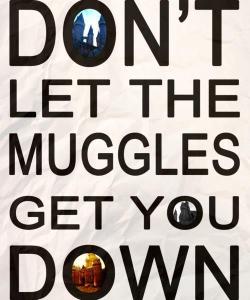 I finally started to realize that this thing was big. I used the app to see what was around my house: dozens, including one a block away. The neighborhood around my work: lousy with caches, including four in the park where I often eat lunch. A random place where I stopped for lunch on the way to San Diego: loads. I realized that geocaching is nothing short of a global phenomenon that has created a parallel universe bound together by a community that borders on a secret society. It has its own lingo, which I picked up on from reading the entries in the logbooks — kind of like a written secret handshake. In fact, geocachers have appropriated the word Muggle from the Harry Potter universe to designate a person who is not playing, a shorthand that happens to be pretty much spot-on.



 Before we get started, about a year ago, I had a lot of good things to say about




 I’m just going to come right out and say it. I’m really just not into cars that much. Sure, I went through my pre-adolescent fixations with Hot Wheels and




 I was recently asked to research and report on the digital media trends that would have the most impact on the entertainment world in 2014, and I wanted to share my findings.
 The first generation of Smart TVs got a bad rap for either being difficult/nonintuitive to use or providing a lot of un-TV-like functionality that consumers didn’t care for. They also suffered from performance/processing issues related to hardware & bandwidth limitations. Some critics went so far as to write off the Smart TV as a failure.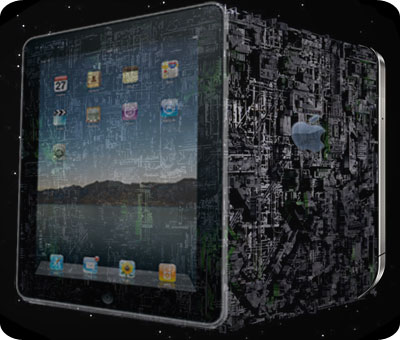

 The Quantified Self movement is primarily associated with self-help and health-oriented applications. However, as the underlying technology develops, it can be integrated as a unique component of entertainment, media, and marketing applications. Biometric sensors will be integrated into next-generation gaming platforms in an effort to provide a richer experience. The gaming industry, with its dynamic, competitive environment, combined with its commitment to large-scale R&D, is well-positioned to lead this development. Precedent strongly suggests that other industries can expect to benefit from a trickle-down effect of these innovations.
 With many trends focused on enhancing the home/mobile experience, LBE can start to feel dated. However, the paradigm of the “Internet of Things” provides a number of opportunities to enhance & streamline these types of experiences. Walt Disney World’s MagicBands is already old news, and despite its massive development and deployment cost, it really only scratches the surface of what’s possible. In the referenced video, Intel even uses a theme park as a complex model to show what IoT can enable. The focus continues to be on operational aspects, but extending these techniques and infrastructure to more entertainment-oriented applications is a natural next step.
 Despite all the hype, Google Glass will be more of a long-term play. Glass will continue to play a central role in the overall future of wearable technology, but it may not be the first device that people gravitate toward in this sector.
 Google Glass is not AR. I’m 100% sure Google would agree with me on this. The AR landscape still lacks an effective, consumer-grade Heads-Up Display (HUD) and applications that really matter. I do not dispute that anyone who experiences AR for the first time, even in its current, clunky handheld-device modality, will feel awe, delight, and even a sense of magic. However, until it can be more seamlessly integrated into everyday life on both a hardware and software level, it will will continue to have limited penetration as a novelty or will be most effective in specialized, controlled use-cases.
 The Memelab