 Look around you. Where are you reading this right now? Chances are, you’re minutes away from an immersive, interactive experience that is waiting for you to discover it. Curious?
First, some background. I’m one of those people who has a hard time doing nothing. That sense of peace that comes from “getting away from it all” wears off for me after about five minutes, and I find myself looking for something stimulating. Not surprisingly, my young children tend to feel the same way. It’s something of a curse, but on a recent trip to the Central Sierras, a wonderland of natural beauty, I was determined to turn it into an opportunity. There just had to be something to do up here that would be entertaining for all of us, right?
 I asked the Internet, and found a tourist-oriented website for the tiny village we were in, and scanned through the usual list of activities. Fishing: please no. Snowmobiling: need snow for that. Hiking: with kids, it ends up being “carrying.” Prospects seemed dismal until I came across “Geocaching.” That rang a bell — something to do with GPS and hiding stuff, but I realized that I really had no idea how one actually did it.
 Skeptically, I installed a free app, waited for it to locate me, and discovered that there were DOZENS of caches within a few miles of my current location (in the middle of nowhere) including one that was 163 FEET away (we were in a local playground at this point.) I tromped off alone in a trance into the adjacent woods like a very slow, poorly-trained bloodhound, climbing over rocks, crossing brooks, crashing through brambles, trying to close the distance between me and whatever lay at the marker on my map. Soon, the other grown-ups got involved, and the kids buzzed around us discovering the fantastic natural playground surrounding them. Looking back, I guess my biggest misconception about geocaching was that it was something that you had to “get into.” However, without really trying, we had effortlessly and unexpectedly landed in the middle of an adventure!
 We didn’t find what we were looking for, but we were undeterred, so for our second try, we chose a cache that seemed a bit easier. Each cache is ranked for difficulty and terrain, and contains a description and optional hints that guide you to the hidden location. We made our way to an unnoteworthy cluster of trees on a street corner that we would have otherwise driven past without giving a second look, however now it was imbued with mystery and potential. We descended upon it like a shoal of piranhas, discovered a camouflage canister hanging from a branch, and eagerly grabbed it, unscrewed the lid. The kids thrilled at the mysterious trove of miscellaneous knick-knacks within while we examined with curiosity the little notepad filled with messages from those who came before us. As we left our own impromptu scrawl for those who would in turn follow in our footsteps, we unwittingly jumped into the slipstream of a previously unknown world that was hidden in plain sight.
Now we were hooked and consulted the app for our next find. It was another easy one, embedded in a jumble of rocks that anchored the sign for a wilderness trail. Except now, the world was transformed; a rusted chain buried in the rocks became a guardian rattlesnake and the unassuming container was a treasure chest of mystery and possibility. We were so engrossed in our adventure that we almost didn’t notice the car pull up behind us.
 The gentleman who stepped out introduced himself as papahog46, and told us that this was his cache. He just happened to be driving by, and he knew exactly what we were up to. I chatted with him a bit, and he said that he had recently come back from the Caribbean where he had left a few caches, and that he has also left a few in various places in Europe. The app allows you to log your finds, and leave a brief message, and he commented that many of the thank you notes he received were in other languages. After he left us to our meanderings, it occurred to me we had been having fun that he had made; transient explorers of a new world he created. We had been hanging out with the Game Maker!
 I finally started to realize that this thing was big. I used the app to see what was around my house: dozens, including one a block away. The neighborhood around my work: lousy with caches, including four in the park where I often eat lunch. A random place where I stopped for lunch on the way to San Diego: loads. I realized that geocaching is nothing short of a global phenomenon that has created a parallel universe bound together by a community that borders on a secret society. It has its own lingo, which I picked up on from reading the entries in the logbooks — kind of like a written secret handshake. In fact, geocachers have appropriated the word Muggle from the Harry Potter universe to designate a person who is not playing, a shorthand that happens to be pretty much spot-on.
 Because there are no formal rules except a common-sense code of conduct that requires you to be a good citizen, it didn’t take long to figure out that caches needn’t be limited to dime-store trinkets and logbooks. Caches could be designed like any other experience and could include a history lesson, or a series of related puzzles, or an elaborate story, or all of them at the same time. I realized that when I entered this world, I felt the same thrill of discovery and ignition of imagination that I get from the best immersive experiences. Except instead of traveling for hours and waiting in line and most likely seeing something that I’ve probably seen before, I could do this anytime, anywhere. Best of all, with an inkling of inclination and a jab of imagination, I could create my own world within the world. Perhaps even one that you’ll stumble into someday.
 When I heard that Wicked Lit featured plays being performed in a graveyard, I flashed back to those cringeworthy moments of my youth making short films in cemeteries, and thought, “This can go very wrong.” However, it was October, and I’ll try anything once if it involves Halloween. As we entered the venue, I had no way of knowing that I was about to experience my favorite show of a very busy season of haunted attractions.
 We were at the
  Our first offering was Dracula’s Guest, and we began by walking through the inner halls of the mausoleum that were spookily lit throughout, an impressive feat considering the myriad corridors and stairways through which we passed. The play started in what was probably the most tradtional “set” of the entire evening — a classic three-walled construction of a 19th century inn. We were soon introduced to Jonathan Harker of Dracula fame, and noted the presence of silver bullets and other familiar trappings of nocturnal menaces. But as quickly as they arrived, these ephemeral wisps of familiar milieu were dissipated by the winds of a brisker, edgier narrative. Harker’s archetypal naiveté is warped by a fierce insolence and (dare I say, millennial) sense of entitlement that made me wonder whether he might actually be better off with a couple of fangs in his neck. We were whisked outside the mausoleum to witness Harker’s journey through the Carpathians, before trekking to the final scene in a vast graveyard that was expansively tricked out with dramatic lighting and immersive sound effects. There, we watched a fierce and decidedly risqué encounter between Harker and two of the Count’s comelier devotees, before returning to the courtyard for our next adventure.
 The second play was The Monk, and it took place in Inquisition-era Venice. In this story, the familiar anchor was that of a Faustian bargain, but with a modern feminist twist. Our heroine was a young woman who, through an unexpected set of circumstances, finds that the pension that has been supporting her studies has been absorbed by the Church. Without this support, as a woman with academic ambitions in 17th century Europe, she finds herself with no option except to join a convent. She enters into a deal with a satanic figure to gain her freedom from society and the Church, but instead of bartering her soul, she must use her powers of seduction to ruin a man of the cloth. The deal itself, and its attendant hooded ghouls and wicked devil, was staged in the mortuary church, a delectably sinful nuance of the production. Finally, we watched the climactic crescendo play out below us in the mausoleum’s beautiful garden from the unique perspective of a balcony.
 The third play was Las Lloronas. Whereas the first two plays were clever dramatic narrative retellings, this piece was an impressionistic feast of story, dance, music, multimedia, and a succession of absolute knockout dramatic performances by every single one of the players. The gist of the narrative was the retelling of an Aztec legend in which a native of Tenochtitlan finds herself wed to Cortes, and subsequently driven mad by his betrayal to the point where she murders her children. The four scenes that followed depicted similar vignettes that showed how this tragic pattern repeated itself in successive generations and increasingly familiar and contemporary settings. While each vignette was hosted and narrated by a handsomely demonic figure, the emotional current of the story was conveyed through movement and passionate performances that embody the special power of the theatre. I felt very fortunate that through the luck of the draw, our group saw this piece last. It was definitely my favorite, and in its final moments, it sent the types of chills down my spine that I had been seeking (and not always finding) all month.
 he Purge last week. OK, that came out weird, let me explain.
 The typical haunted attraction tends to be a fairly linear affair. You start at the beginning and keep moving until you get to the end, trying to absorb or avoid (depending on your preference) as many scares as you can along the way. In contrast, Breakout is billed as “An Immersive Escape Experience.” Groups of up to six guests are locked into the attraction at one time and given thirty minutes to try to figure out how to get out by deciphering clues and solving puzzles that are embedded in the surroundings. The concept of an Escape Room attraction is not new, and did not originate as a horror-themed show, but as

 We solved a bunch of puzzles. We tried our hardest. We celebrated our successes. But in the end, we died. Murdered to be exact. Time ran out, and for us, it just wasn’t enough. If we had five more minutes! If we had only done such-and-such! Did we remember to look behind that one thing? We wallowed in the coulda-woulda-shouldas for a minute or two, but the general consensus from all of us was, “That was SUPER FUN!”
 I was in awe at how naturally we worked together as a team, despite the fact that we barely knew each other. People’s strengths immediately surfaced — the codebreakers, the searchers, the observers, the scouts — without any explicit coordination. Almost all of the puzzles required some form of cooperation, but it somehow happened in a seamless way. When it was all over with, we felt like old friends, and made plans to get together for future events once October rolls around. It was magical.

 Before we get started, about a year ago, I had a lot of good things to say about





 Singing into the wind. Bailing out the Titanic with a teacup. That is the sense of futility I feel when it comes to sharing something insightful that hasn’t already been said about The Wizarding World of Harry Potter at Universal’s Islands of Adventure. The entire production is an unqualified success from the Butterbeer to Bertie Bott’s Every-Flavour Beans; from the Forbidden Journey to Filch’s Emporium. It’s a feast for the senses worthy of the Great Hall at Hogwarts, and cannot fail to delight even the most studious and persnickety of fans.
 As much as I gaped, marveled, delighted, and thrilled at everything I was experiencing, there was one detail, which I keep coming back to that crystallizes the strong sensibilities at work here. After having made my way through Hogsmeade a few times, I kept noticing a building with a modest line outside of it. I’m sure with a bit of investigation, or perusing the park map, or asking a cast member, I could have figured out what it was, but I did none of these things, and decided to just allow myself to be surprised. About every ten minutes or so, the doors to the adjoining building would open, about 30 guests would be allowed in, and the doors would close again. Curiosity piqued.
 So why is it that in a land that features one of the most technologically sophisticated attractions on the planet, an exquisitely themed restaurant complete with a bar that sells real alcohol, and an infinity of detailed exteriors and interiors, I was so taken by this bit at Ollivander’s? The answer is simple. The decision to showcase this particular component of the Harry Potter mythology demonstrates a true respect and understanding for the material and why it resonates with our culture.
 However, the execution is equally stunning. It’s a very low-profile attraction, and it’s easy to miss. You can easily enter the real store through an alternate entrance and be none the wiser of what’s happening in the adjoining room. This deliberate understatement in an environment of overload is a very tasteful design decision, and makes the experience feel even more special. Granted, it is somewhat of a holy grail to deliver guests a personalized, intimate experience in theme parks, but the sheer numbers of guests often make this an impractical goal, and tends to be at odds with another hallmark of theme park design: consistency. This makes the choice to use the modality of immersive theatre even more daring. Attractions have been breaking the 4th wall for generations as a technique to kickstart an immersive experience. From the Ghost Host and the talking skull to Indy and Evac, we have been personally invited to enter the story instead of just watch from afar. However, beloved as those characters are, they’re still a step removed from us, no matter how amazing the technology gets. Quite literally bringing Ollivander’s to life creates an impact that is not soon forgotten even if you are not the chosen one (and chances are, at my age, it’s gonna have to be a pretty slow day.)
 I’m just going to come right out and say it. I’m really just not into cars that much. Sure, I went through my pre-adolescent fixations with Hot Wheels and


 I was recently asked to research and report on the digital media trends that would have the most impact on the entertainment world in 2014, and I wanted to share my findings.
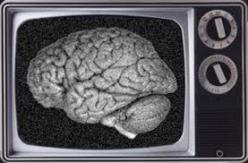 The first generation of Smart TVs got a bad rap for either being difficult/nonintuitive to use or providing a lot of un-TV-like functionality that consumers didn’t care for. They also suffered from performance/processing issues related to hardware & bandwidth limitations. Some critics went so far as to write off the Smart TV as a failure.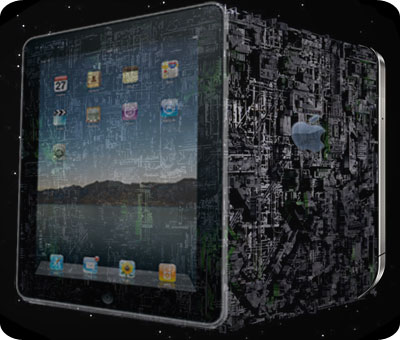

 The Quantified Self movement is primarily associated with self-help and health-oriented applications. However, as the underlying technology develops, it can be integrated as a unique component of entertainment, media, and marketing applications. Biometric sensors will be integrated into next-generation gaming platforms in an effort to provide a richer experience. The gaming industry, with its dynamic, competitive environment, combined with its commitment to large-scale R&D, is well-positioned to lead this development. Precedent strongly suggests that other industries can expect to benefit from a trickle-down effect of these innovations.
 With many trends focused on enhancing the home/mobile experience, LBE can start to feel dated. However, the paradigm of the “Internet of Things” provides a number of opportunities to enhance & streamline these types of experiences. Walt Disney World’s MagicBands is already old news, and despite its massive development and deployment cost, it really only scratches the surface of what’s possible. In the referenced video, Intel even uses a theme park as a complex model to show what IoT can enable. The focus continues to be on operational aspects, but extending these techniques and infrastructure to more entertainment-oriented applications is a natural next step.
 Despite all the hype, Google Glass will be more of a long-term play. Glass will continue to play a central role in the overall future of wearable technology, but it may not be the first device that people gravitate toward in this sector.
 Google Glass is not AR. I’m 100% sure Google would agree with me on this. The AR landscape still lacks an effective, consumer-grade Heads-Up Display (HUD) and applications that really matter. I do not dispute that anyone who experiences AR for the first time, even in its current, clunky handheld-device modality, will feel awe, delight, and even a sense of magic. However, until it can be more seamlessly integrated into everyday life on both a hardware and software level, it will will continue to have limited penetration as a novelty or will be most effective in specialized, controlled use-cases.
 Some people go to Hawaii on vacation to enjoy a little R&R in a beautiful setting. Others prefer a staycation where they can catch up on hobbies or just get back in touch with the simple pleasures of home. Me, I head down to LA for three successive nights of immersive horror theater. At least, that’s what I did in October.
 All you know about Blackout is: you need to sign a waiver before entering, it takes place in the dark, you must do as you’re told when prompted, there’s a safe word in case it gets too intense, and you must walk through alone. Is your imagination working yet? Mine was. From the moment I purchased the ticket, my mind was filled with questions. What the hell happens in there? What are they going to make me do? Does anyone use the safe word? Am I up for this? Can’t we just have a nice dinner somewhere and tell everybody we went?
 Fast forward about 30 minutes. I emerge, running, out of the dark, out of the building and onto the same sidewalk in downtown LA that I had lately and nervously ambled along on my way in. My eyes scan for something familiar; I see the people I befriended in line. I see my wife. We all breathlessly exchange snippets of experience, but it’s not really a time for words, and we all arrive at that conclusion at about the same time. I feel the crisply soothing autumn air on my skin now that I’m outdoors again. I’m soaking in the vibe of people milling on the fringes of this nondescript corner of downtown LA. I can hear and feel my heart beating; it seems to be returning to a more normal pace, but it’s not in a hurry. And neither is the rest of me. I’m alert. I’m aware of this strange, animal feeling where I can experience the world in five or more senses, and calmly it alights on my understanding. This feeling — it’s the feeling of being alive. Not the “oh my god that was so scary, I’m so glad to be alive” feeling. Quite the opposite: I realized that I hadn’t had that much fun in a long time.
 As we made our way through the city, back to the car, out in public, it became very clear that there was US and then there was everybody else around us. We moved through the crowds in this glowing bubble that only we could see. We just had this incredible experience that lit our brains on fire, and nobody else had any idea as they went about their evening. There was no judgment or condescension on our part, but we felt different and special. And that feeling was important and persisted for the rest of the night, and for several days afterward. In fact, I can still conjure that feeling and remember what it’s like to feel my senses rip into the texture of life, and for that I’m both grateful for the experience and inspired to create something that can have that kind of effect.
 I lived in Prague during a period when email was still a novelty, mobile phones were seen in Tom Cruise movies as devices used for making phone calls, and internet cafes actually had computers in them. A popular means for distributing information was known as a “newspaper,” and a few were published in English for the benefit of the expat community. One of these featured a column called, “Easy Targets,” which was an unannotated list of people, institutions, concepts, etc. that would be recognizable to a contemporary reader. And that was it. Further commentary was neither provided nor required. A similar list published today might include, “Congress, Miley Cyrus, Facebook status, gluten-free beer, you get the idea.” One fateful afternoon, I picked up said newspaper and immediately sought out the Easy Targets, and at the top of the list was, “Smažený Syr.” For me, this was and is the absolute soul of wit. There is so much depth and commentary packed into those two words that it can still bring a smile to my face today. Let me explain.


 The Memelab